
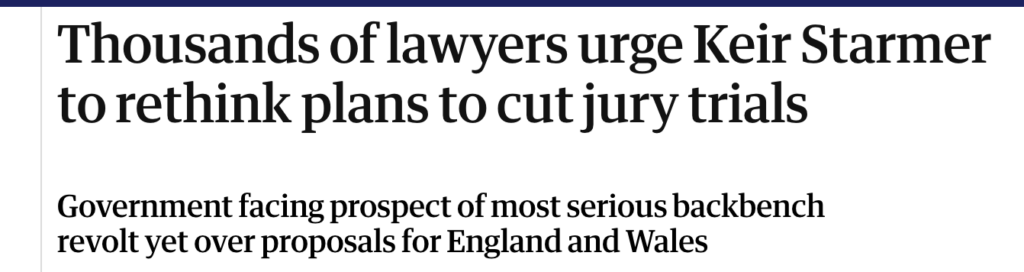

Some Labour MPs abstained on the Second Reading of the Courts and Tribunals Bill this week. I was one of them, and I want to explain why.
This bill contains reforms that many victims have long campaigned for. For survivors of rape and sexual violence, it will end the deeply harmful practice of using a victim’s previous disclosures of abuse against them in court – a defence tactic designed to make survivors look untruthful for having reported violence before. It will also restrict inappropriate questioning about sexual history, and improve the special measures available to victims giving evidence.
The government is also investing an additional half a billion pounds into a court system that has been allowed to collapse – more sitting days, more legal aid funding, and direct support for rape victims navigating the system.
So why did some of us abstain rather than vote it through?
Because the bill also proposes removing the right to a jury trial in any case where the likely sentence is three years or less. That is a cornerstone of British justice that has protected ordinary people for centuries, and we cannot support removing it. Even more so given the crisis of trust in our democracy and the institutions that prop it up.
But voting the bill down entirely at Second Reading would have killed the investment and the protections for survivors that came with it. It would have handed the opposition exactly what they wanted and made a symbolic gesture, which, at the time, I deemed less valuable than the reforms and funding.
The strategy is this: keep the bill alive, then bring a precise amendment at Report Stage to remove the jury-trial changes. That is the real vote. If that amendment fails and the trial by jury provisions remain, then yes, I will vote against the whole bill at Third Reading, accepting the painful trade-off.
This isn’t cowardice. It’s trying to save what’s good while fighting hard to remove what’s wrong. Some colleagues felt that voting against the Second Reading to send a signal to the government and the public was more important. Sometimes it is, and I have voted on the second reading of bills down in the past. This, though, wasn’t one of them.
As the brilliant Robin Cook observed, the difficult but necessary place in politics we should strive to operate within is the narrow precipice between pragmatism and principle. It’s a difficult tightrope, and we won’t always get it right. But it is the fulcrum between the two extremes where serious politics takes place.
Hence, my abstention for now.
I guess sometimes in politics, despite Regan’s exhortation, explaining really is necessary.