
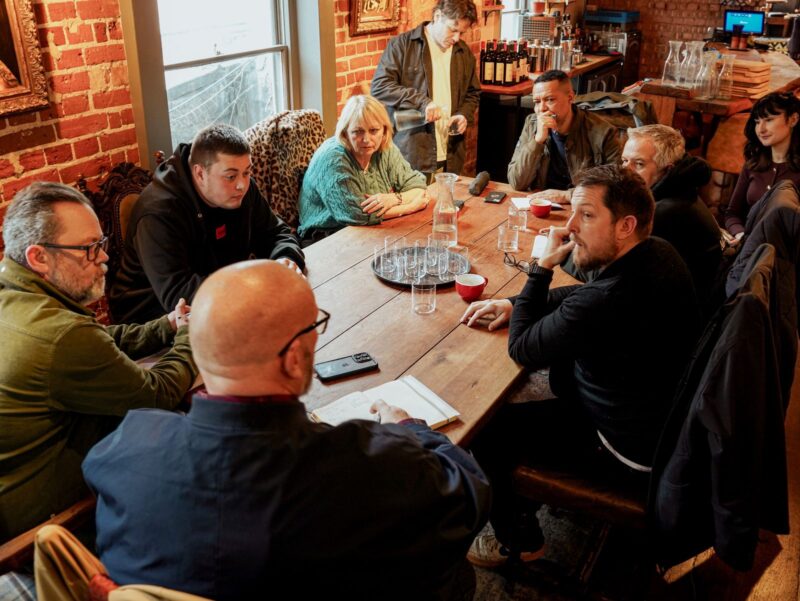
I held a small roundtable this week with pubs and hospitality businesses here in Norwich. A big thank you to Gonzo’s Tea Room for hosting, and to the Night Time Industries Association (NTIA) for coming along at my request to give an update on the national work we’ve been doing together.
It’s fair to say the Budget did not land well with many publicans and hospitality owners. Not because people expect miracles, but because it felt piecemeal and uncertain. Business rates remain high and unpredictable. There was no long-term clarity on VAT. Alcohol duty continues to ratchet up. And staffing costs are rising without any serious attempt by government to bring down the other costs businesses face.
There’s talk now of the government extending elements of Covid-era business rates relief or adjusting cut-off points. That may help at the margins, and for some pubs it could make a real short-term difference. But it also highlights a much bigger and more pressing problem.
Most hospitality owners know where they can lobby government directly: business rates, VAT, alcohol duty, staffing rules. Those are the visible levers. But the pressures that are really crushing small businesses often sit elsewhere, and are harder to escape.
The cost of inputs keeps rising. Grain, food, water and energy. Transport that is expensive and poorly connected. Housing costs for staff that push wages ever higher just so people can stand still. Rents driven up by landlords seeking ever higher returns. Supermarkets selling alcohol cheaper than a cash-and-carry can buy it. Online giants like Amazon paying a fraction of the tax local businesses do, using armies of accountants to avoid their fair share.
Water bills up by more than 30 per cent this year, while pipes leak and investment stalls. Energy prices among the highest in western Europe. A transport system that costs too much and delivers too little. A housing system where homes are treated as assets to speculate on, not places to live. Developers land-banking, land values soaring, rents rising faster than pay.
This is the extractive economy we now live in. Workers and small businesses squeezed from every direction. Money pulled out rather than reinvested. A cycle of decline.
If we want to fix it, we have to be honest about what’s broken. Better pay has to go hand in hand with lower costs. Wages will only go further if we stop letting monopolies and rent-seekers squeeze the essentials of life. That means taking democratic control of key assets like water, energy, transport and housing. It means building an economy that is productive, not extractive.
SMEs are the lifeblood of our local economy. They employ most people, and when they succeed, more of that money stays here in Norwich and the surrounding areas instead of being siphoned off to distant shareholders.
I’m not anti-business. I’m pro-business. But I am firmly anti-monopoly, anti-price-gouging, and anti a system that rewards extraction over contribution.
Who government chooses to pick fights with matters. Instead of going after pensioners and disabled people, let’s take on the vested interests that are hollowing this country out. That’s the change a Labour government should be making.