
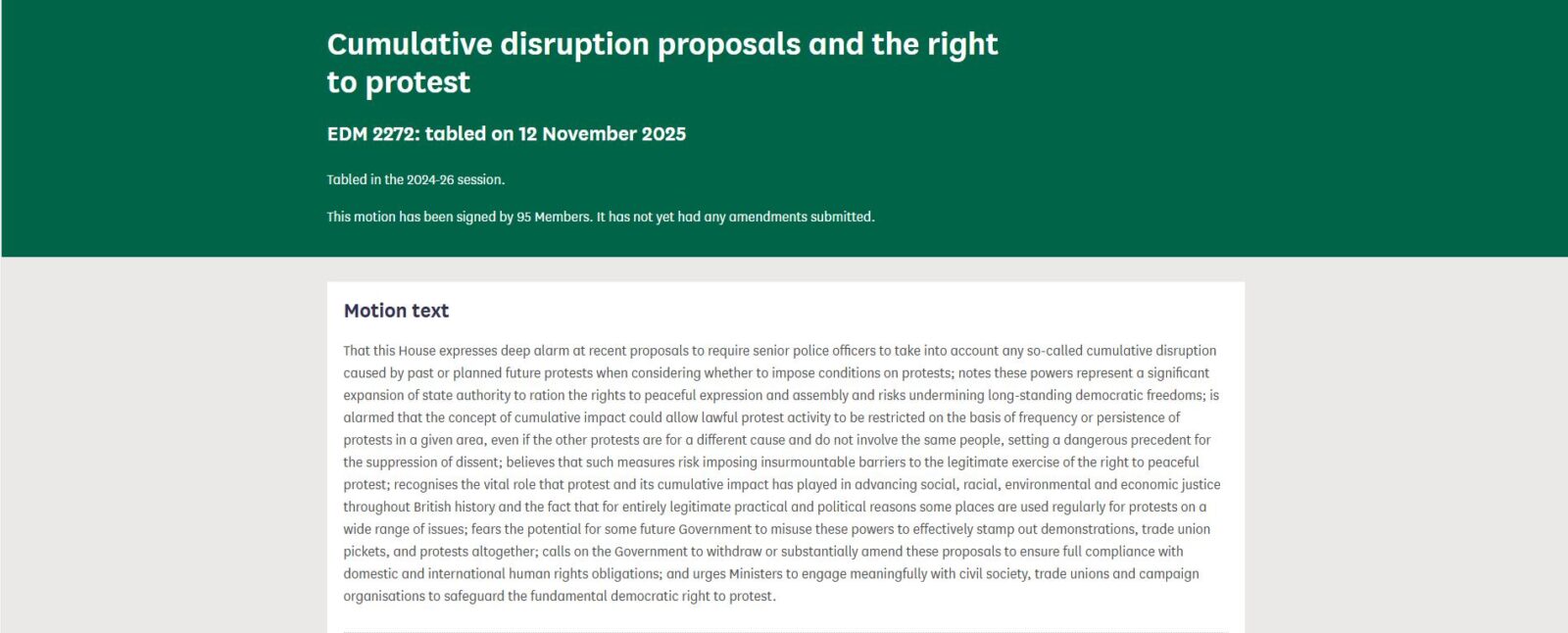
I have joined nearly 100 MPs to express alarm with proposals to take into account so-called ‘cumulative disruption’ when considering whether to impose conditions on protests.
This represents a major encroachment on rights to peaceful expression and assembly and risks undermining long-standing democratic freedoms.
These proposals have wide ranging effects and follow a succession of anti-protest laws, which could be used to effectively stamp out peaceful protests.
I am therefore backing Early Day Motion 2272, put forward by my Labour colleague Andy McDonald. The motion says:
“That this House expresses deep alarm at recent proposals to require senior police officers to take into account any so-called cumulative disruption caused by past or planned future protests when considering whether to impose conditions on protests; notes these powers represent a significant expansion of state authority to ration the rights to peaceful expression and assembly and risks undermining long-standing democratic freedoms; is alarmed that the concept of cumulative impact could allow lawful protest activity to be restricted on the basis of frequency or persistence of protests in a given area, even if the other protests are for a different cause and do not involve the same people, setting a dangerous precedent for the suppression of dissent; believes that such measures risk imposing insurmountable barriers to the legitimate exercise of the right to peaceful protest; recognises the vital role that protest and its cumulative impact has played in advancing social, racial, environmental and economic justice throughout British history and the fact that for entirely legitimate practical and political reasons some places are used regularly for protests on a wide range of issues; fears the potential for some future Government to misuse these powers to effectively stamp out demonstrations, trade union pickets, and protests altogether; calls on the Government to withdraw or substantially amend these proposals to ensure full compliance with domestic and international human rights obligations; and urges Ministers to engage meaningfully with civil society, trade unions and campaign organisations to safeguard the fundamental democratic right to protest.”
The right to protest is a precious democratic principle and must be defended.